Common Beach House Mistakes: The Definitive Investor’s Guide
The acquisition and management of coastal real estate represent a specialized discipline where the margins for error are significantly narrower than in inland markets. For the uninitiated, the allure of the shoreline often obscures the mechanical and systemic realities of a high-energy maritime environment. A beach house is not merely a residence by the water; it is a structure in a constant state of negotiation with corrosive salt air, shifting sand, and intensifying weather patterns. When this negotiation is mishandled, the financial and structural consequences are rarely linear—they are compounding.
True expertise in this sector requires a departure from the “vacationer’s gaze.” Investors and homeowners must adopt a perspective that prioritizes the structural envelope, the integrity of specialized systems, and the volatility of local regulatory landscapes over aesthetic trends or proximity to the surf. The most resilient coastal assets are those designed and maintained with a cold eye toward entropy, acknowledging that the ocean is a relentless catalyst for material decay and logistical friction.
This editorial analysis serves as a comprehensive deconstruction of the systemic oversights that plague coastal property ownership. By moving beyond surface-level warnings, we examine the underlying frameworks of asset failure and the strategic pivots required to preserve value. This is a definitive reference for those seeking to institutionalize their approach to seaside real estate, ensuring that their investment remains a stable asset rather than a depreciating liability.
Understanding “common beach house mistakes”
The phrase “common beach house mistakes” is often trivialized as a list of decor faux pas or minor maintenance oversights. However, in a professional editorial context, these mistakes represent a fundamental misalignment between human intent and environmental reality. The most critical errors are systemic—they involve the miscalculation of “salt-loading” rates, the underestimation of hydrostatic pressure during surge events, and the failure to account for the “regulatory ceiling” of short-term rental legislation.
A primary misunderstanding is the belief that high-quality construction inland translates directly to high-quality construction on the coast. A standard galvanized fastener that lasts fifty years in a temperate forest environment may suffer structural failure in five years on a beachfront deck. Therefore, a “mistake” is often simply the application of the wrong material logic to a specialized zone. Many owners fail because they treat their beach property as a static asset rather than a dynamic system requiring constant calibration.
Oversimplification risks are prevalent in the acquisition phase. Prospective buyers often focus on “ocean views” while ignoring the “setback trends” of the local coastline. If a property is losing two feet of dune per year and the local ordinance prohibits new sea walls, the “view” is a ticking clock. Mastery in this field requires looking past the horizon to the micro-data of soil stability and insurance actuarials.
Historical and Systemic Evolution of Coastal Property Failures
The history of coastal development is a chronicle of shifting risk thresholds. In the early 20th century, beach houses were largely “sacrificial”—seasonal cottages built with the expectation that they might be damaged or moved. They used local timber, simple pier foundations, and possessed minimal interior utility. The systemic failure was low because the capital investment was low.
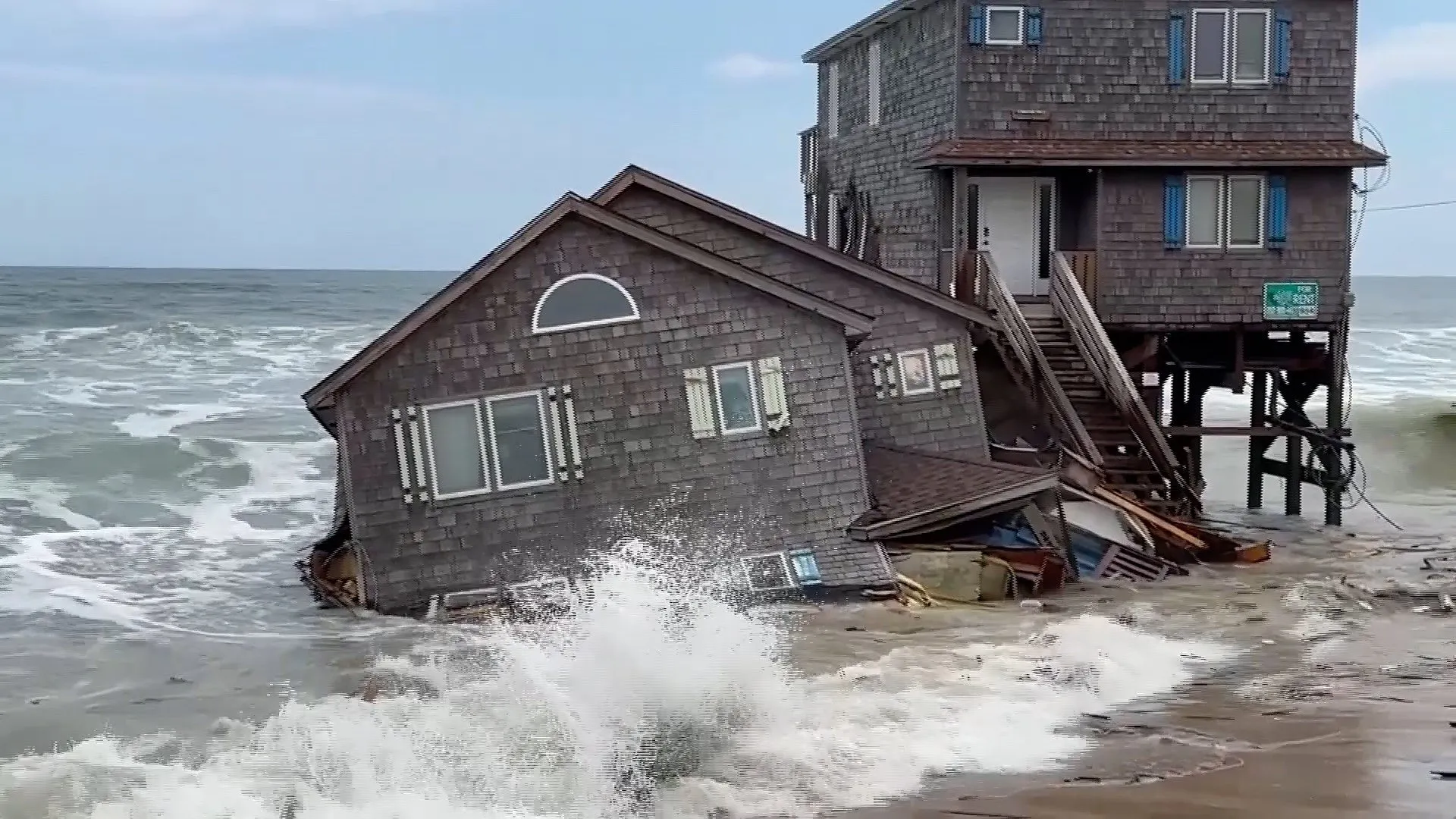
The transition to the “Permanent Beach Residence” in the mid-to-late 20th century introduced a new tier of vulnerability. As coastal homes became larger, more expensive, and filled with sophisticated electronics and HVAC systems, the cost of environmental failure skyrocketed. We entered an era where “armoring” the coast with concrete and steel became the default, creating a false sense of security that led to over-development in high-risk “V-zones.”
Today, we are seeing the emergence of a “Resilience Gap.” While technology has improved our ability to predict storms and monitor structural health, the escalating cost of specialized labor and the withdrawal of private insurance from many coastal markets have created a landscape where a minor oversight can lead to total asset insolvency. The modern investor is no longer just a landlord; they must be a student of hydrology, material science, and legislative flux.
Conceptual Frameworks and Mental Models
To navigate the complexities of coastal ownership, one must utilize specialized mental models that prioritize long-term stability over short-term yield.
1. The Entropy Acceleration Framework
This model posits that the coast is a “high-velocity” environment for material decay. Standard depreciation schedules are irrelevant here. Instead, one should apply a “3x multiplier” to the wear-out rate of any exposed mechanical or structural component. If a roof is rated for 30 years, the coastal mental model assumes a 10-year functional horizon before major remediation is required.
2. The P-F Interval for Coastal Systems
In reliability engineering, the P-F interval is the time between when a failure is first detectable (P) and when the system actually fails (F). In a beach house, the P-F interval for salt-induced corrosion is remarkably short. Once a “rust bleed” appears on a piling bolt, structural compromise is already underway. This model dictates a “Zero-Tolerance” approach to maintenance; intervention must occur at the first “P” signal to avoid the catastrophic “F.”
3. The Hydrodynamic Equilibrium
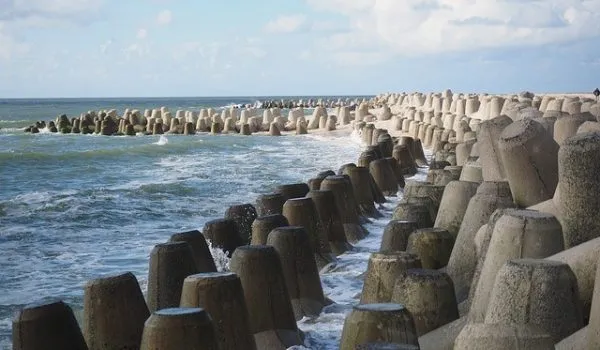
This model views the property as part of a moving system. Sand is a fluid. Waves are energy. Any intervention that attempts to stop this energy (like a sea wall) will inevitably displace it elsewhere. Understanding common beach house mistakes involves recognizing that fighting the equilibrium is a losing fiscal battle; the goal is to design for “transparency”—allowing energy and water to flow through or under the structure.
Categories of Strategic Errors and Material Trade-offs
Errors in coastal management typically fall into three buckets: Structural, Operational, and Financial.
| Error Category | Typical Mistake | Strategic Trade-off | Long-term Consequence |
| Structural | Incompatible fasteners | Initial cost vs. Longevity | Snapped deck boards; structural collapse |
| Operational | Standard HVAC units | Purchase price vs. Coating | Coil failure within 24 months |
| Financial | Under-insured “Actual Cash Value” | Premium cost vs. Payout | Total loss without funds to rebuild |
| Material | Porous stone surfaces | Aesthetics vs. Porosity | Salt-pitting; mold intrusion |
| Logistical | No remote monitoring | DIY management vs. Service | Undetected leaks leading to rot |
Decision Logic: The Scarcity of Durability
The primary decision logic for a coastal owner should be: If it is difficult to reach, make it permanent. This applies to foundation pilings, roof flashing, and internal plumbing. Using “budget” materials in inaccessible locations is a compounding error, as the labor cost to replace them will eventually be five times the material savings.
Detailed Real-World Scenarios
Scenario A: The HVAC “Standard” Fallacy
An owner replaces a failed air conditioning unit with a standard model from a big-box retailer to save $4,000.
-
The Mistake: The unit lacks “seacoast coatings” on the condenser coils.
-
Failure Mode: Within 18 months, the salt air has eaten through the aluminum fins, causing a refrigerant leak.
-
Result: The unit must be replaced again, and the owner has lost not just the $4,000 but also the labor costs and two weeks of rental revenue during a heatwave.
Scenario B: The Decking “Bleed”
A builder uses high-quality cedar for a deck but uses “electro-galvanized” nails instead of 316-grade stainless steel.
-
The Mistake: Misunderstanding the chemical reaction between salt and zinc.
-
Second-Order Effect: The nails react with the cedar’s tannins and the salt air, creating black streaks (“bleeding”) that ruin the aesthetic.
-
Ultimate Failure: Within five years, the nails have rusted through at the joist level. The deck boards become loose, creating a safety liability that forces a full tear-off.
The Economics of Coastal Maintenance and Hidden Costs
Maintenance on the coast is not a chore; it is a capital preservation strategy. The “Salt Tax” is a very real economic phenomenon that manifests as higher premiums for everything from insurance to specialized window cleaning.
Annual Operating Expense Variability
| Factor | Inland Multiplier | Coastal Requirement |
| Exterior Wash | 0.5x (Annual) | 4x (Quarterly rinse is mandatory) |
| Paint/Stain | 1x (7-10 years) | 2x (3-5 years) |
| Window Integrity | 1x (Standard) | 3x (High-impact/Salt-resistant seals) |
| Insurance | 1x (Standard) | 5x – 10x (Flood/Wind/Excess) |
Support Systems and Technological Mitigation
Modern technology offers a “buffer” against human error, provided it is integrated into the property’s governance.
-
Smart Water Shut-offs: Devices like Flo by Moen are critical for beach houses that sit vacant for weeks. A small leak in a salt-humid environment can lead to total flooring failure in days.
-
Corrosion-Resistant Hardware: Transitioning all exterior hardware—including hinges and door handles—to marine-grade stainless steel or PVD coatings.
-
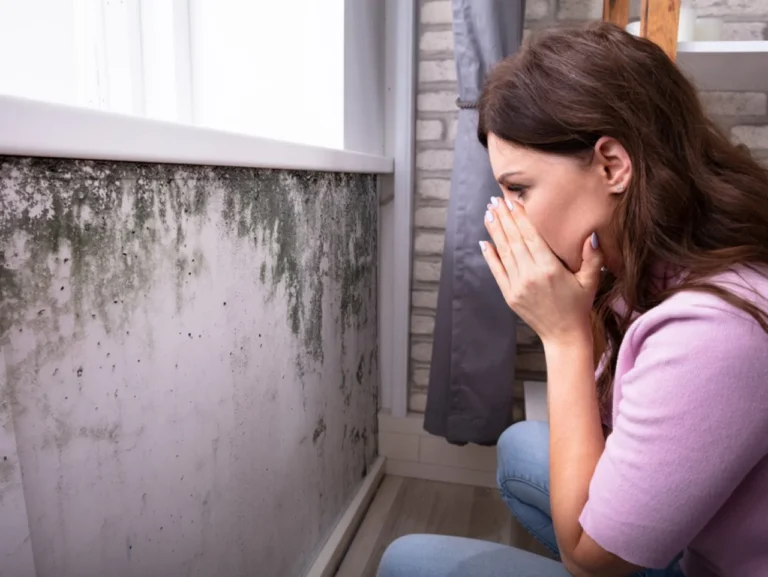
Remote Atmospheric Monitoring: Sensors that track internal humidity. If the HVAC fails and humidity spikes above 60%, mold can colonize a coastal home’s soft goods within 72 hours.
-
LIDAR and Drone Surveys: Used to track dune erosion rates annually, providing data-driven signals for when to engage in “beach nourishment” or structural reinforcement.
-
Industrial-Grade Dehumidification: Integrated systems that maintain the interior as a “dry-zone,” countering the natural ingress of maritime moisture.
The Risk Landscape: Compounding Failure Modes
The most dangerous aspect of coastal ownership is Compounding Failure. This is when a small, neglected maintenance item compromises a primary protective system during a storm event.
Taxonomy of Risks:
-
The “Flying Debris” Cycle: A neglected, rusted deck railing breaks loose during a gale, becoming a projectile that shatters a non-impact window, which then allows the wind to pressurize the interior and lift the roof.
-
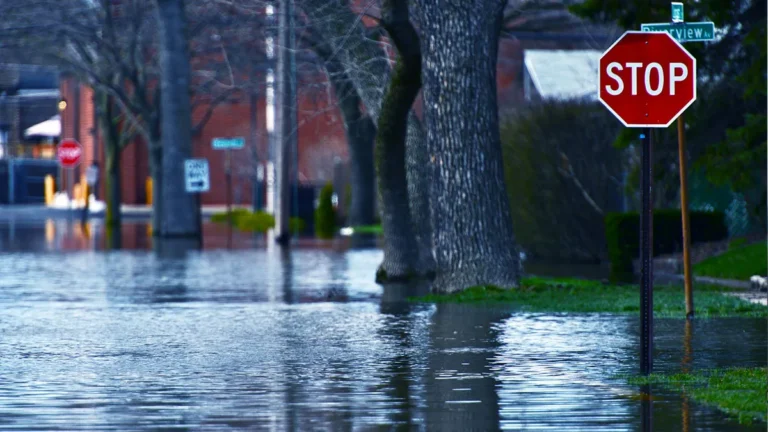
The “Hydrostatic Lift”: Failure to maintain proper drainage around a foundation during a storm surge leads to the “buoyancy effect,” where the house is literally lifted off its pilings.
-
The “Legislative Sunset”: Purchasing a property with the intent to rent, only to have the local municipality ban short-term rentals six months later because you failed to track the city council’s long-term agenda.
Governance, Maintenance, and Long-Term Adaptation
A beach house requires a “Proactive Governance” model. This involves a shift from “fixing what is broken” to “replacing what is destined to fail.”
The Multi-Tier Maintenance Audit
-
Weekly (The Rinse): Fresh-water wash-down of all exterior metal and windows to remove salt crust.
-
Monthly (The Mechanical): Exercise the HVAC and inspect the condensate lines; salt and sand frequently clog these.
-
Annually (The Structural): Inspect the “toe” of foundation pilings for scour or rot; audit all “hurricane tie-down” connectors for pitting.
-
Decadal (The Strategic): A full review of the shoreline’s position relative to the structure; assessment of whether to “harden” the asset or plan for retreat.
Measurement: Tracking Performance and Degradation
One of the most common beach house mistakes is the failure to document the rate of decay. Without data, an owner cannot predict the “Fiscal Cliff” of major repairs.
-
Leading Indicators: The rate of “pitting” on stainless steel samples placed near the shore; the frequency of HVAC service calls.
-
Lagging Indicators: Total annual maintenance spend as a percentage of property value; occupancy loss due to system failure.
-
Documentation: A digital “Logbook” for the house, tracking every repair, the specific materials used (e.g., “316 vs 304 stainless”), and the weather conditions during specific failure events.
Common Misconceptions and Strategic Myths
-
“Newer Homes are Storm-Proof”: While they meet modern codes, the “complexity” of new homes (electronics, elevators) makes the “recovery cost” after a storm significantly higher than for older, simpler homes.
-
“The Salt is Only on the Outside”: In high-wind environments, salt air penetrates wall cavities. If you don’t have a robust vapor barrier and “rain-screen” siding, your wall studs can rot from the inside out.
-
“Flood Insurance is for the Coast Only”: Pluvial flooding (heavy rain) can happen anywhere. Assuming you only need “Wind/Hail” is a classic financial error.
-
“Concrete is Maintenance-Free”: Rebar inside concrete can rust and expand (“spalling”), cracking the foundation. Concrete in a salt environment requires specialized silane-siloxane sealers.
-
“I Can Handle the Maintenance Myself”: Unless you live within 20 minutes of the property, the “travel cost” of DIY maintenance usually exceeds the cost of a professional management firm.
Conclusion: The Ethics of Coastal Stewardship
The acquisition of a beach house is a commitment to a specific kind of vigilance. It is an acknowledgment that we are guests on a shifting margin. The mastery of coastal real estate is found in the rejection of “easy” solutions and the embrace of intellectual honesty regarding the environment’s power.
Successful owners are those who view their property not as a trophy, but as a system to be stewarded. By avoiding the common pitfalls of material incompatibility and operational neglect, one can preserve both the physical structure and the financial legacy of the asset. In the end, the sea is an honest judge of our engineering and our judgment; it rewards those who respect its power with a home that stands the test of time and tide.