How to Reduce Hurricane Damage: A Definitive Guide to Structural Resilience
The structural integrity of the built environment is frequently tested by the kinetic energy of tropical cyclones, events that expose the friction between human settlement and atmospheric physics. In the coastal and inland corridors prone to these storms, the objective of property management is shifting from a paradigm of “recovery” to one of “pre-emptive resilience.” This transition recognizes that a hurricane is not a single event but a complex sequence of mechanical stresses: extreme positive and negative wind pressures, aerodynamic lift, impact from airborne debris, and the hydraulic force of storm surges or torrential precipitation.
To effectively mitigate the impact of such forces, one must move beyond the superficial checklist of “boarding up windows” and engage with the concept of the continuous load path. A building is an integrated assembly of components; if any link—from the roof shingles to the foundation anchors—fails, the entire system is compromised. The current editorial perspective on residential and commercial hardening suggests that the most successful strategies are those that treat the building envelope as a pressurized vessel. Once that vessel is breached, the internal pressure can equalize with external winds, often resulting in the catastrophic “blowout” of the roof structure.
Furthermore, the economic and social dimensions of hurricane preparedness are undergoing a fundamental recalibration. As global climate patterns increase the frequency of rapid intensification in tropical systems, the “lead time” for traditional reactive measures is shrinking. This reality mandates a shift toward “Passive Survivability”—designing and retrofitting structures so they remain habitable and structurally sound without external power or immediate post-storm intervention. This analysis explores the technical, systemic, and behavioral frameworks required to secure assets against the increasingly volatile maritime climate.
Understanding “how to reduce hurricane damage”
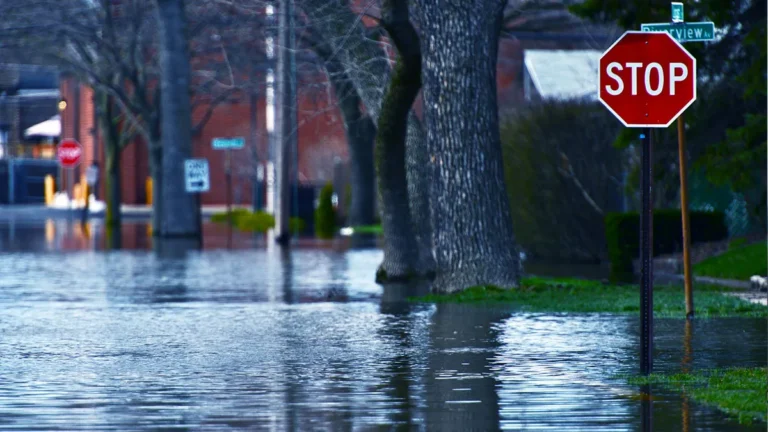
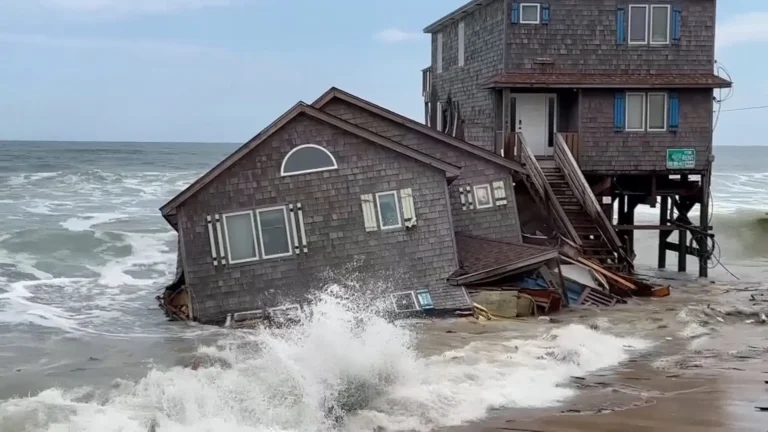
The mastery of how to reduce hurricane damage begins with the recognition that wind is not the only variable, and often not the most destructive one. A primary misunderstanding in the public sphere is the disproportionate focus on “shuttering.” While protecting glazing is critical to prevent internal pressurization, it does nothing to address “Hydrostatic Pressure”—the force exerted by standing water against a foundation—or “Scour,” where moving water removes the soil supporting a structure. Mitigation, therefore, must be a multi-modal discipline that addresses wind, water, and debris simultaneously.
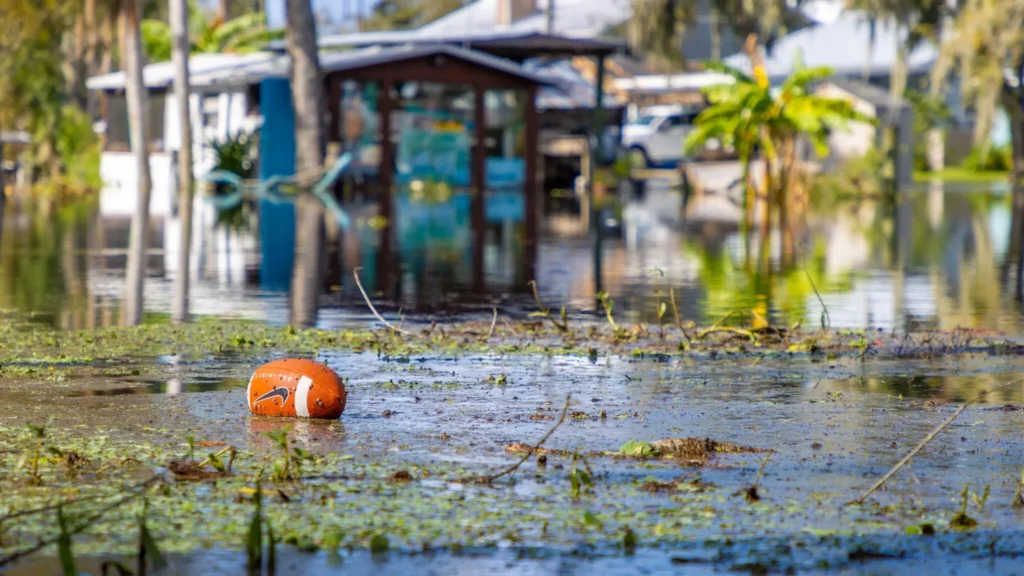
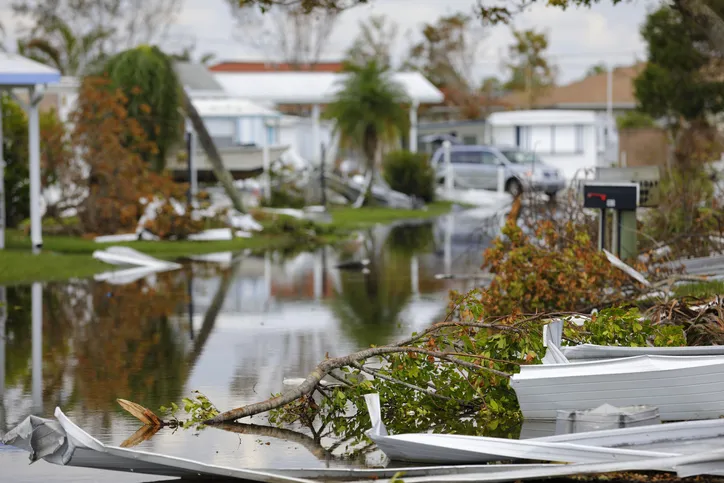
Oversimplification risks are particularly high when homeowners rely on the “Shielding Myth.” This is the belief that because a property is several miles inland or shielded by other buildings, it is immune to catastrophic loss. In reality, wind speeds can accelerate between buildings through the “Venturi Effect,” and inland flooding from stalled tropical systems often causes more financial damage than coastal surges. A sophisticated approach requires a “Site-Specific Fluid Dynamics” mindset, evaluating how local topography, neighboring structures, and tree canopies will funnel wind and water toward the specific asset.
The multi-perspective explanation of damage reduction also involves the “Aesthetic-Structural Conflict.” Many property owners hesitate to implement high-impact retrofits—such as permanent storm shutters or elevated foundations—because they perceive them as detrimental to the property’s visual appeal. However, modern engineering has introduced “Concealed Resilience,” such as impact-rated decorative windows and reinforced “Safe Rooms” that integrate seamlessly into a luxury interior. Understanding that resilience is a functional layer, rather than a visible intrusion, is essential for long-term adoption.
Contextual Background: The Evolution of Storm Resistance
The methodology of storm protection has transitioned from vernacular wisdom to high-resolution engineering.
The Vernacular Adaptation (1700–1900)
Early coastal inhabitants utilized “Passive Design.” This included building on “Pilings” to allow storm surges to pass under the structure and employing steeply pitched roofs to reduce wind lift. These structures were often “sacrificial,” designed to be easily rebuilt using local timber, emphasizing survival over the preservation of the finished interior.
The Code Revolution (1992–2010)
Hurricane Andrew in 1992 served as a watershed moment for North American building standards. It revealed that many contemporary “Budget” construction techniques—such as stapled roof sheathing—were utterly insufficient. This led to the development of the “High Velocity Hurricane Zone” (HVHZ) codes, which mandated the “Continuous Load Path” (strapping the roof to the walls and the walls to the foundation).
The Era of Predictive Modeling (2010–Present)
Today, we utilize “Computational Fluid Dynamics” (CFD) to simulate how specific wind gusts will interact with a building’s unique geometry. We have moved from broad “Zone” requirements to “Address-Level” risk assessments, allowing for hyper-targeted retrofits that prioritize the specific weak points of an individual structure.
Conceptual Frameworks and Mental Models for Resilience
To manage hurricane risk, one must adopt the mental models of a structural engineer and a hydrologist.
1. The Continuous Load Path Model
Think of a house as a chain. If the wind pulls on the roof, that force must be transferred through the rafters, into the wall studs, and down into the concrete footings. If there is a break in this chain (e.g., a wall that is merely nailed to a floor plate rather than bolted), the wind will find it. Resilience is the absence of breaks in this force transfer.
2. The “Pressurized Vessel” Theory
A building is most vulnerable when its “Skin” is breached. If a window breaks, the wind rushing into the house pushes up on the roof, while the wind rushing over the roof pulls up from the outside. These additive forces are what lead to roof failure. Mitigation is about maintaining the “Inviolable Envelope.”
3. The “Slow and Flow” Hydrology Framework
For flooding, the goal is not to stop water but to manage its energy. This involves “Wet Floodproofing” (allowing water to flow through a crawlspace via flood vents) or “Dry Floodproofing” (using impermeable barriers). The framework dictates that you cannot fight the ocean; you can only direct its path.
Key Categories of Protective Intervention
Effective mitigation requires a tiered approach, prioritizing the most critical failure points first.
| Intervention Category | Primary Protective Mechanism | Trade-off / Limitation | Logic |
| Roofing | Hurricane Straps / Ring-Shank Nails | High labor cost for retrofits | Prevents the “Lid” from blowing off. |
| Glazing | Impact Windows / Polycarbonate | Significant upfront capital | Maintains the pressurized envelope. |
| Openings | Reinforced Garage Doors | Heavy weight / Industrial look | Prevents the largest “Hole” in the vessel. |
| Landscaping | Tree Thinning / Permeable Beds | Reduced shade / High maintenance | Minimizes debris and manages runoff. |
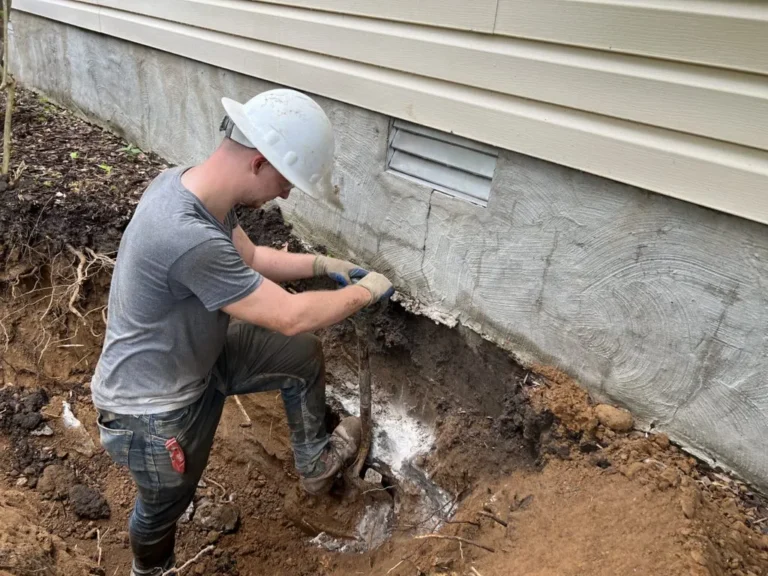
| Foundation | Helical Piles / Flood Vents | Engineering complexity | Prevents “Scour” and hydraulic lift. |
| Utilities | Elevated HVAC / Generators | Noise / Fuel storage risks | Ensures “Passive Survivability.” |
Decision Logic: The “Weakest Link” Audit
A homeowner should not spend $20,000 on impact windows if their garage door is a standard, unreinforced thin-gauge metal. During a storm, the garage door will buckle, the house will pressurize, and the roof may fail regardless of the window strength. The logic of how to reduce hurricane damage dictates that funds should be distributed to ensure a uniform level of protection across all envelope components.
Detailed Real-World Scenarios and Failure Modes
Scenario A: The “Gable End” Collapse
A well-maintained 1980s home has a high-pitched gable roof. During a Category 3 storm, the wind hits the flat “A-frame” of the gable.
-
Failure Mode: The gable wall was not braced to the attic floor. The wind pressure pushes the wall inward, causing the roof trusses to lose their support and collapse.
-
The Fix: Installing X-bracing and “Strong-Backs” in the attic to transfer the wind load from the gable wall into the floor system.
Scenario B: The “Negative Pressure” Shingle Loss
A homeowner installs “architectural” shingles but uses standard roofing nails.
-
Failure Mode: As wind passes over the roof peak, it creates a vacuum (negative pressure). This “Lift” pulls the shingles off the roof, exposing the plywood deck.
-
The Result: Water penetrates the deck, saturating the attic insulation until the ceiling drywall collapses under the weight.
-
The Fix: Using “Ring-Shank” nails and a “Secondary Water Barrier” (peel-and-stick underlayment) so that even if shingles are lost, the house stays dry.
Planning, Cost, and Resource Dynamics
The economics of mitigation are often obscured by the “Discount Bias”—underestimating the probability of a low-frequency, high-impact event.
Range-Based Resource Dynamics for Resilience
| Mitigation Level | Cost Range (USD) | Primary Driver | ROI Factor |
| Basic (DIY/Retrofit) | $500 – $2,500 | Sealants, Bracing, Landscaping | Insurance premium reduction |
| Intermediate (Hardening) | $5,000 – $15,000 | Garage doors, Hurricane fabric | Significant damage avoidance |
| Advanced (Structural) | $20,000 – $60,000+ | Impact glass, Roof replacement | Property equity preservation |
The “Direct Cost” of a retrofit is a capital expenditure, but the “Indirect Cost” of a total loss includes displacement, loss of sentimental assets, and the “Insurability Gap”—where a home becomes uninsurable due to lack of modern upgrades.
Technical Strategies and Support Systems
-
Hurricane Fabric Screens: A high-tech alternative to metal shutters; these are translucent, easy to deploy, and absorb debris impact energy through elasticity.
-
Aerodynamic Roof Geometry: When rebuilding, opting for a “Hip Roof” (sloped on all four sides) rather than a Gable roof. Hip roofs naturally deflect wind and are 50% less likely to fail.
-
Secondary Water Barriers: Applying a self-adhering polymer membrane over the roof’s wood deck before the shingles go on. This is the single most cost-effective way to prevent interior water damage.
-
Flood Vents: Strategic openings in a crawlspace or garage that allow water to enter and exit freely, equalizing the pressure so the walls don’t “implode.”
-
Smart Leak Detection: Wi-Fi-enabled sensors that shut off the main water valve if a pipe bursts due to structural shifting during a storm.
-
Bio-Swales and Rain Gardens: Engineered landscaping that slows down the movement of water across a property, preventing the erosion of foundation soil.
Risk Landscape and Compounding Failure Modes
The primary threat during a hurricane is the “Cascading Failure.”
-
The “Debris Cannon” Risk: Your home may be perfectly hardened, but if your neighbor has loose patio furniture or a gravel driveway, those items become high-velocity projectiles that can breach even impact-rated glass.
-
The “Corrosion Creep”: In coastal environments, salt air slowly eats away at the “Hurricane Ties” in your attic. A strap that was strong in 2015 may be a pile of rust by 2026.
-
The “Micro-Burst” Phenomenon: Hurricanes often spawn small, intense tornadoes. A home hardened for 130 mph winds may still fail if hit by a 160 mph localized vortex.
Governance, Maintenance, and Long-Term Adaptation
Resilience is not a “one-and-done” installation; it is a “Lifecycle Governance” protocol.
The Annual Resilience Audit
-
Pre-Season (May): Test the garage door’s “Wind-Load” pins. Ensure they are lubricated and seat properly in the floor.
-
Envelope Check: Inspect the “Sealant” around windows and door frames. Sunlight degrades these seals, creating paths for “Wind-Driven Rain.”
-
Vegetation Management: Prune any tree branches within 10 feet of the roofline. Focus on “V-shaped” crotches, which are the most likely to split.
-
Adjustment Trigger: If you replace your HVAC system, the new unit must be bolted to a hurricane-rated pad, not just resting on plastic blocks.
Measurement, Tracking, and Evaluation
-
Leading Indicator: The “Opening-to-Protection Ratio.” What percentage of your home’s “holes” (windows, doors, vents) are currently rated for the local 100-year wind speed?
-
Lagging Indicator: “Post-Storm Recovery Time.” How many days after a storm does it take for the property to return to full functionality?
-
Qualitative Signal: Insurance “Wind Mitigation Credits.” If your insurer isn’t giving you a discount, your mitigation measures may not meet the current engineering standards.
Common Misconceptions and Strategic Corrections
-
“Taping Windows Prevents Breaking”: Correction: Tape does nothing for strength; it actually creates larger, more dangerous shards of glass if the window fails. Use shutters or impact glass.
-
“Cracking a Window Equalizes Pressure”: Correction: This is a dangerous myth. Opening a window on the “leeward” side can actually increase the internal suction, making roof failure more likely. Keep the house sealed.
-
“My House Survived the Last One, So It’s Fine”: Correction: Every storm has a different “Angle of Attack.” Survival of one storm may have been due to shielding that won’t exist in the next one.
-
“Sandbags Stop Flooding”: Correction: Standard sandbags are rarely watertight. They are best used to divert moving water, not to seal a door against a rising surge.
-
“Flat Roofs are Stronger”: Correction: Flat roofs are actually highly susceptible to “Uplift” and “Ponding” failure. A 30-degree “Hip” pitch is the gold standard for wind resistance.
Ethical and Practical Considerations
There is a growing “Resilience Gap” between those who can afford high-end retrofits and those in marginalized communities who are often “Rent-Captive” in unhardened structures. From an editorial and civic perspective, how to reduce hurricane damage must eventually become a matter of public policy rather than just individual wealth. Furthermore, the “Moral Hazard” of federal flood insurance sometimes encourages rebuilding in high-risk zones without adequate mitigation. Practical honesty requires admitting that in some coastal areas, the only true “reduction” of damage is “Managed Retreat”—moving structures back from the receding shoreline.
Conclusion: The Synthesis of Resilience
The successful preservation of an asset in a hurricane-prone region is a synthesis of engineering, discipline, and environmental humility. It requires a shift from viewing a house as a static object to viewing it as a dynamic system designed to manage energy. By adhering to the continuous load path, maintaining the inviolable envelope, and governing the landscape, a property owner can significantly tilt the odds of survival in their favor. The ultimate goal is not just to survive the storm, but to ensure that the home remains a functional refuge in its aftermath, preserving both physical capital and the continuity of life.