Beach House Construction Plans: The Definitive Guide to Resilient Coastal Design
The architectural blueprint for a coastal residence is a document that must negotiate between the romanticism of maritime living and the harsh physics of the land-sea boundary. Unlike inland residential design, where environmental factors are often secondary to aesthetic or programmatic goals, the creation of a coastal asset is primarily a matter of environmental engineering. Every line drawn in a set of maritime plans represents a strategic decision against a specific threat: the corrosive capacity of salt spray, the hydrostatic pressure of a storm surge, or the uplift forces of high-velocity wind zones.
In the current climate of 2026, the complexity of this process has scaled exponentially. Developing a coastal property is no longer a localized endeavor but a multi-disciplinary challenge involving geologists, structural engineers specializing in high-wind load, and environmental consultants navigating a tightening regulatory landscape. The goal is the creation of “Embedded Resilience”—a state where the home is not merely standing on the shore but is functionally integrated into the shifting dynamics of the dunes and the sea.
This editorial provides a definitive deconstruction of the technical and strategic layers within modern coastal residential planning. We move beyond the superficial selection of floor plans to examine the systemic requirements of a permanent maritime structure. This analysis serves as a comprehensive reference for understanding how design decisions translate into long-term asset stability, covering everything from the metallurgy of salt-resistant alloys to the “hydrodynamic transparency” of foundation logic.
Understanding “beach house construction plans”
To a layperson, the term “beach house construction plans” might suggest a standard set of architectural drawings with a nautical theme. In a professional editorial context, however, these plans represent a complex legal and engineering “performance contract” with the environment. A superior set of coastal plans is characterized by its specificity to a micro-climate’s “V-Zone” (Velocity Zone) or “A-Zone” requirements. It must account for the Base Flood Elevation (BFE) while providing a margin of safety—often referred to as “Freeboard”—that anticipates future sea-level projections.
A primary misunderstanding is that high-quality coastal plans are simply inland plans “on stilts.” This oversimplification ignores the physics of “scour” (where moving water removes soil from around foundations) and “internal pressurization” (where a single broken window can lead to roof lift-off during a hurricane). True coastal plans prioritize the “Invisible Shell”—the metallurgical grade of every screw, the tension of the hurricane straps, and the airtightness of the vapor barriers that prevent salt-rot within the wall cavities.
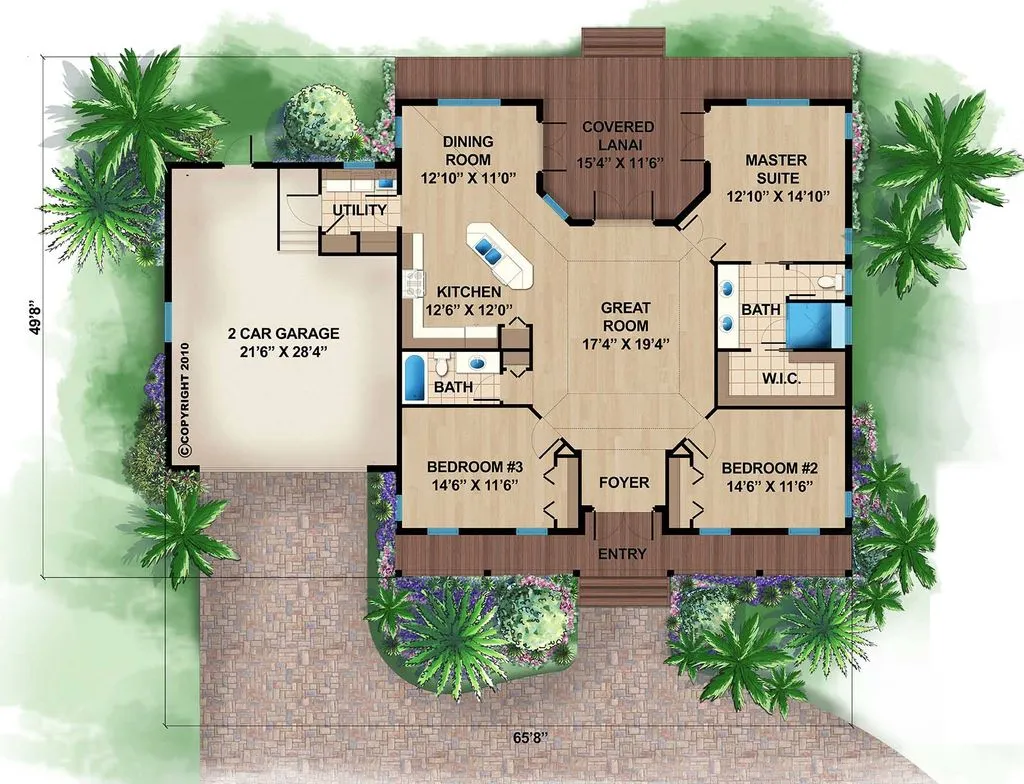
Oversimplification risks are high when evaluated only through the lens of square footage. In coastal construction, the complexity of the “Below-the-BFE” space is as critical as the living area above. This includes the design of breakaway walls that must fail under specific pressure to protect the main pilings, and the engineering of utility “risers” that keep electrical and plumbing systems safe from salt-water intrusion. Identifying the most robust beach house construction plans requires looking past the floor plan to the “Schedule of Fasteners” and the foundation’s “Z-Depth” calculations.
Contextual Evolution: From Vernacular Camps to Hardened Estates
The trajectory of coastal architecture reflects our changing cultural relationship with the sea—from a seasonal guest to a permanent resident.
The Era of the Sacrificial Cottage (1880s–1940s)
Historically, coastal dwellings were “sacrificial.” In the early colonies of the Northeast or the Gulf, structures were light-framed and often sat on simple cedar posts. These were seasonal camps. If a storm took the house, the loss was manageable because the capital intensity was low. The “plan” was simply a rectangle designed for maximum cross-ventilation.
The Mid-Century Modern Expansion (1950s–1990s)
The introduction of federally backed flood insurance and modern air conditioning led to the “Brute Force” era. Builders used concrete blocks and heavy timber to fight the ocean. However, this period created “brittle” assets—structures that were sound until a specific threshold was crossed, at which point they failed catastrophically because they were too rigid to adapt to shifting dunes.
The Era of Adaptive Resilience (2015–Present)
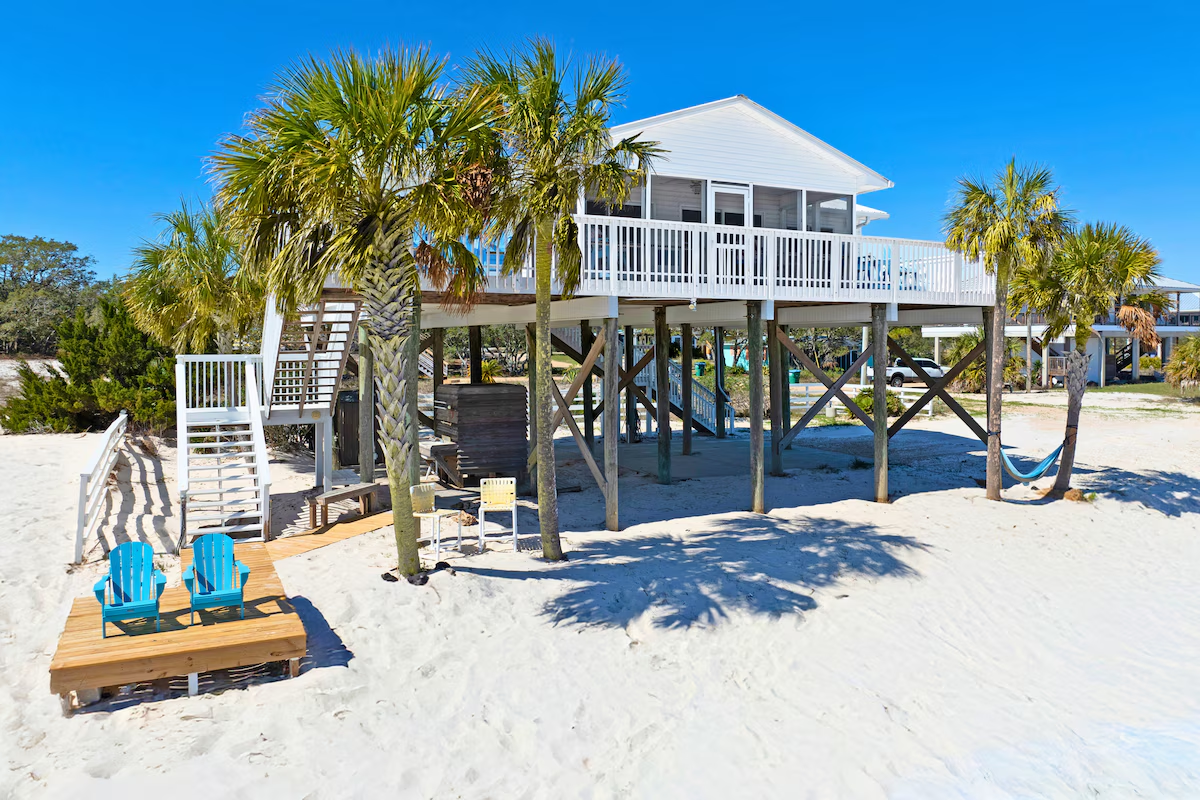
Today, we are in the era of “Hydrodynamic Transparency.” Flagship plans utilize high-performance composites, carbon-fiber reinforcements, and “active” foundation systems. The goal is no longer to block the ocean’s energy but to allow it to pass through or under the house with minimal friction.
Conceptual Frameworks for Maritime Design
To master the selection of a coastal plan, one must apply specific mental models that prioritize long-term stability over short-term yield.
1. The Piling-to-Peak Load Path
In coastal zones, wind doesn’t just push against a house; it pulls it up. This framework views the house as a single, continuous structural loop. The “best” plans document a “continuous load path” from the roof peak down to the foundation pilings using a network of tension rods and heavy-duty steel connectors.
2. The P-F Interval (Potential to Failure)
In reliability engineering, this is the time between when a failure is first detectable (P) and when the system fails (F). In salt-air environments, this interval is remarkably short. A superior plan specifies materials with long P-F intervals—such as 316-grade stainless steel over 304-grade—acknowledging that maintenance in coastal zones is three times more expensive than inland.
3. The Biophilic-Hardened Duality
This model suggests that the best coastal home is one that feels “open” (high glass-to-wall ratios) while remaining functionally “closed” (impact-rated glazing and airtight seals). Achieving this requires a sophisticated understanding of structural “moment frames” that allow for large glass spans without compromising wind resistance.
Regional Categories and Material Trade-offs
The American shoreline is divided into distinct “High-Energy Provinces,” each requiring a specific architectural response.
| Regional Category | Foundation Archetype | Primary Threat | Key Material Trade-off |
| New England | Granite-bound/Helical | Salt-air decay & Nor’easters | Wood shingle vs. composite siding |
| Mid-Atlantic | Elevated Timber Pile | Storm surge & dune migration | Open-pile vs. breakaway lattice |
| Florida/Gulf | Concrete Monopile | Hurricane surge & humidity | Concrete mass vs. thermal cooling |
| Southern Cal | Seismic Caissons | Slope stability & salt mist | Steel frames vs. galvanic corrosion |
| Pacific NW | Rugged Biophilic | Moisture & extreme wind | Large overhangs vs. uplift risk |
Decision Logic: The Scarcity of Permanence
The primary decision logic for a coastal builder should be: If it is structural, it must be marine-grade. This applies to foundation connectors, roof flashing, and internal plumbing. Using “standard” materials in inaccessible locations like wall cavities is a compounding error.
Swell Dynamics and Structural Logic: Real-World Scenarios
Scenario A: The “Wash-Through” Success
A flagship property in the Outer Banks is hit by a 14-foot storm surge.
-
The Plan: The house features an open “wash-through” ground level with breakaway walls.
-
The Event: The surge destroys the ground-level storage and lattice but flows under the main structure.
-
The Result: While neighbors with slab-on-grade foundations suffered “scour” and structural collapse, this home remained standing and re-occupied within weeks.
Scenario B: The Pacific “Misting” Failure
A modern steel-and-glass home in Malibu begins to show structural “bleeding” (rust) within 36 months.
-
The Mistake: The plans specified 304-grade stainless steel for the exterior clips instead of 316-grade.
-
Second-Order Effect: The salt-mist became trapped between the clips and the glass, creating a concentrated corrosive cell.
-
Result: All 400 glass clips required replacement at a cost of $180,000, requiring extensive scaffolding that closed the home for months.
The Economics of Coastal Building: Costs and Resources
The financial architecture of a beach build is dominated by “Invisible Premiums”—costs that provide no square footage but ensure the asset’s survival. In 2026, the “Salt Tax” typically adds 30% to 50% to the total construction budget.
Range-Based Resource Allocation (Per Square Foot)
| Component | Inland Standard | Coastal Premium | The “Resilience” Logic |
| Foundation | $25 – $40 | $150 – $300 | Driven pilings to “refusal” depth. |
| Glazing (Windows) | $50 – $80 | $200 – $450 | Impact-rated, salt-misting seals. |
| Roofing | $15 – $25 | $45 – $90 | Standing-seam metal or heavy tile. |
| HVAC Systems | $15,000 | $35,000 | Marine-coated coils; elevated. |
Strategic Support Systems for Coastal Implementation
Modern beach house construction plans must be supported by an industrial-grade technological “stack.”
-
Industrial Dehumidification: Integrated systems that maintain 45-50% humidity, preventing “salt-damp” colonization of textiles and electronics.
-
Sacrificial Anodes: Utilizing zinc or magnesium plates on underwater or underground metal structures to “draw” corrosion away from critical steel.
-
LIDAR Dune Mapping: Using annual drone-based LIDAR surveys to track sand volume on the property and trigger nourishment before the buffer is lost.
-
Smart Water Shut-offs: Critical for remote-owned assets where a minor leak in a high-humidity environment leads to total flooring failure in days.
-
Marine-Grade PVD Coatings: Physical Vapor Deposition on hardware ensures door handles and locks don’t “pit” or seize within the first 24 months.
-
Hydrostatic Pressure Relief: “Smart vents” in foundation walls that automatically open during a flood to equalize water pressure.
The Risk Landscape: Compounding Failure Modes
The primary threat to a coastal asset is “Environmental Technical Debt.” This occurs when small, neglected maintenance items compromise a primary protective system.
-
The Galvanic Loop: When dissimilar metals (e.g., aluminum and copper) touch in a salt environment, they create a “battery” effect that rapidly dissolves the aluminum.
-
Erosion Blindness: Building a “hardened” house on a lot with an active erosion rate of >3 feet per year without a plan for eventual retreat.
-
The “Luxury” Blind Spot: Investing $200,000 in interior finishes while neglecting a $10,000 roof-flashing upgrade, leading to “hidden” salt-rot that ruins the interior.
Governance, Maintenance, and Long-Term Adaptation
A beach house is a living system that requires a “Governance Manual” similar to a superyacht. The best plans are those with a documented “Obsolescence Schedule” for every exterior component.
The Coastal Adaptive Checklist
-
Quarterly: Pressure wash all exterior surfaces with fresh water. Salt crust is the primary driver of seal failure.
-
Bi-Annually: Inspect all “hurricane straps” and piling bolts for signs of “bleeding” or pitting.
-
Annual: Audit the “Energy Envelope.” Use thermal imaging to detect moisture ingress behind siding.
-
5-Year Cycle: Re-evaluate the “V-Zone” status and insurance actuarials. Adjust the “Retreat Trigger”—the specific shoreline distance at which the owner begins planning for structural relocation.
Measurement: Tracking Performance and Degradation
To maintain value, a coastal property must move from “opinion-based” maintenance to “data-based” measurement.
-
Leading Indicators: The rate of discoloration on “test strips” of metal; internal humidity spikes; the frequency of HVAC coil cleaning.
-
Lagging Indicators: Total annual maintenance spend as a percentage of property value; insurance premium fluctuations.
-
Documentation: A digital “Hull Log” that records every storm event, every wash-down, and the performance of specific material brands.
Common Misconceptions and Strategic Corrections
-
“Concrete is Maintenance-Free”: False. It is porous. Salt reaches the rebar, which rusts and expands, cracking the concrete from the inside out.
-
“Impact Windows are Unbreakable”: They are designed to stay in the frame to prevent pressurization, but they will crack and require replacement after a hit.
-
“The Salt is Only on the Outside”: High-wind environments force salt-laden mist into wall cavities. Without a robust vapor barrier, studs can rot invisibly.
-
“Newer is Always Better”: Some 1920s designs are more resilient because they allow water to flow through the structure more freely.
-
“Insurance Covers Everything”: Most policies exclude “gradual” salt damage and have massive deductibles for “Wind/Hail.”
Conclusion: The Judgment of the Coast
The creation of beach house construction plans is ultimately an exercise in “Environmental Stewardship.” There is an emerging ethical component to these builds: a structure that fails in 20 years is an environmental disaster. True luxury in 2026 involves building a structure that is robust enough to last for 100 years.
As the coastline continues to evolve, the most resilient assets will be those that embrace “Adaptive Permanence”—the ability to remain functional in a landscape defined by flux. By prioritizing resilience, material compatibility, and data-driven maintenance, an owner ensures that their coastal retreat remains a generational asset. The sea is an honest judge; it rewards those who respect its power with a home that endures.