How to Manage Coastal Erosion: The Definitive Engineering & Policy Guide
The interface between terrestrial stability and oceanic kinesis is perhaps the most volatile frontier in modern environmental management. Coastal erosion is not merely a geological event; it is a systemic challenge that intersects with civil engineering, economic solvency, and ecological integrity. As sea levels rise and storm frequencies intensify, the traditional paradigm of “holding the line” is being replaced by more nuanced, adaptive strategies that acknowledge the ocean’s inherent unpredictability.
Managing this retreat or defense requires a departure from short-term reactionary measures. Historically, interventions have been localized and siloed, often solving a problem on one beach only to exacerbate it on the next. A sophisticated understanding of coastal dynamics recognizes that the shoreline is a river of sand; to interrupt its flow is to fundamentally alter the equilibrium of the entire coastal cell.
This analysis serves as a definitive exploration of the methodologies, philosophies, and technical frameworks required to address land loss. We move beyond the binary of “hard” versus “soft” engineering to examine the integrated systems that allow human settlements and natural habitats to persist in an era of shifting margins.
Understanding “how to manage coastal erosion”
At its core, the question of how to manage coastal erosion is a question of energy dissipation. The ocean delivers immense kinetic energy to the shoreline through waves, tides, and currents. Erosion occurs when the land’s resistance—whether through geological hardness or biological binding—is overcome by this energy. Therefore, management is the art of either reflecting that energy, absorbing it, or strategically retreating from its path.
A multi-perspective view reveals that “management” means different things to different stakeholders. To a municipal engineer, it involves the structural integrity of seawalls and revetments. To a marine biologist, it signifies the restoration of mangroves and seagrasses that naturally attenuate wave height.
The risk of oversimplification in this field is high. Many believe that dumping sand on a beach—nourishment—is a permanent fix. In reality, without addressing the underlying hydrodynamic drivers, that sand acts as a temporary and expensive “bandage.” True management requires a longitudinal view that accounts for sediment budgets, longshore drift, and the inevitable encroachment of the high-water mark.
Systemic Evolution of Coastal Intervention
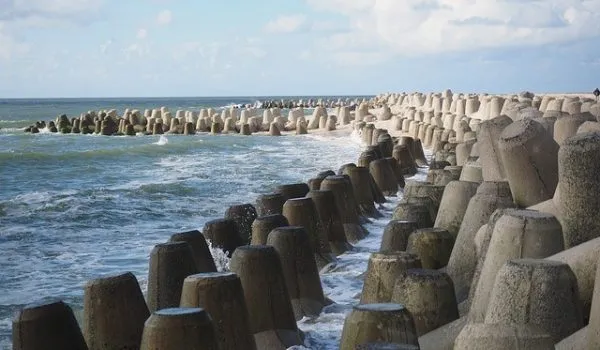
The history of coastal management is a chronicle of human hubris gradually yielding to environmental reality. In the 19th and early 20th centuries, the prevailing philosophy was “Hard Armoring.” Massive concrete walls and rock groins were constructed with the belief that the sea could be permanently rebuffed. While these structures protected specific assets, they often starved downdrift beaches of sediment, leading to catastrophic erosion elsewhere.
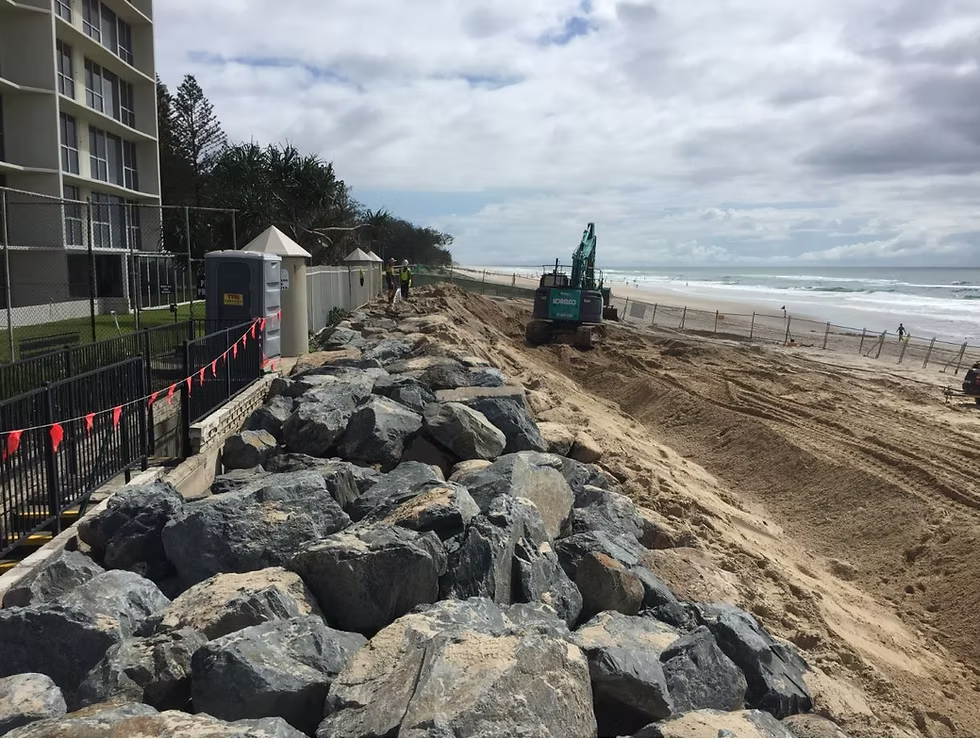
The late 20th century saw the rise of “Soft Engineering.” This era prioritized mimicking natural processes, using sand dunes and vegetation to create resilient buffers. This shift was driven by the realization that rigid structures often accelerate the loss of the very beaches they were meant to save by causing wave scouring at the base of the walls.
Today, we are entering the era of “Integrated Coastal Zone Management” (ICZM). This approach treats the coastline as a single, interconnected system. It combines engineering, policy, and ecology, moving away from the “defense” mindset toward one of “adaptation.”
Conceptual Frameworks and Mental Models
To navigate the complexity of shoreline management, practitioners utilize several high-level mental models:
1. The Coastal Cell Equilibrium
A coastal cell is a self-contained segment of the coast that manages its own sediment budget. This model posits that sand is neither created nor destroyed within the cell; it is merely moved. If you trap sand in one part of the cell (via a groin), you must account for the deficit created elsewhere.
2. The Energy Buffer Gradient
This framework views the coast as a series of filters. The further offshore an intervention starts (e.g., an artificial reef), the less energy reaches the primary dune. Management is most effective when it utilizes multiple layers of defense rather than relying on a single “wall.”
3. Managed Retreat vs. Fortification
This is a decision-making framework based on “Path Dependency.” Once a coastline is armored, it becomes increasingly difficult and expensive to remove that armoring. This model forces a choice: do we invest in the perpetual maintenance of a fixed line, or do we begin the multi-decade process of moving infrastructure inland?
Methodological Categories and Variations
Successful management strategies are usually a hybrid of several techniques tailored to the specific fetch, depth, and sediment type of the area.
| Category | Primary Mechanism | Longevity | Ecological Impact |
| Hard Armoring | Reflects wave energy | High (30-50 years) | Negative (Beach loss) |
| Beach Nourishment | Adds sediment volume | Low (2-10 years) | Neutral to Positive |
| Living Shorelines | Bio-binding & absorption | Variable (Growth-based) | Highly Positive |
| Strategic Retreat | Removes target assets | Permanent | Positive |
| Breakwaters | Dissipates energy offshore | Moderate | Moderate (Alters flow) |
Decision Logic: The “Triple Bottom Line”
Choosing a method requires weighing the Economic (cost of construction vs. value of assets), Environmental (habitat preservation), and Social (public beach access) impacts. A seawall might save a road but destroy the public beach, representing a social and environmental failure despite an engineering success.
Detailed Real-World Scenarios
Scenario A: The “Groin Effect” Failure
A luxury resort installs a series of rock groins to build up its private beach. While successful in the short term, the groins trap the longshore drift.
-
Second-Order Effect: The public park two miles down the coast loses its entire beach within three years, leading to a massive lawsuit and the eventual forced removal of the groins.
-
Lesson: Localized solutions in a shared coastal cell are high-risk.
Scenario B: The Managed Retreat Success
A small coastal community realizes that nourishment costs are doubling every five years. They implement a 20-year “rolling easement” policy.
-
Decision Point: Instead of a new seawall, the town uses the funds to purchase inland lots and offers “buy-backs” to homeowners.
-
Result: The community maintains a wide, healthy beach that attracts tourism, while the residential core slowly shifts to higher ground.
Planning, Cost, and Resource Dynamics
The financial planning for coastal defense must account for both “Capital Expenditure” (CapEx) and “Operational Expenditure” (OpEx). Hard structures have high initial costs but lower frequent maintenance, whereas soft solutions like nourishment require perpetual reinvestment.
Estimated Cost Ranges (Per Linear Foot)
| Strategy | Initial Cost | Maintenance Cycle | Opportunity Cost |
| Seawall | $5,000 – $15,000 | 10-20 years | Loss of recreation space |
| Nourishment | $1,500 – $4,000 | 3-7 years | Disrupts benthic life |
| Living Shoreline | $1,000 – $3,000 | Ongoing (Self-healing) | Requires wide space |
| Artificial Reef | $3,000 – $8,000 | 15-25 years | Navigational hazard |
Tools, Strategies, and Support Systems
Modern management utilizes a “Digital Twin” approach to simulate outcomes before moving a single stone.
-
Bathymetric Lidar: High-resolution mapping of the seafloor to understand how waves will break.
-
Wave Tank Modeling: Physical scaling of structures to test failure points under storm surge.
-
Sediment Tracing: Using fluorescent or radioactive tracers to follow the exact path of sand movement.
-
Dune Vegetation Protocols: Specialized planting of sea oats or mangroves to bind soil.
-
Geotextile Tubes: Large sand-filled sleeves used as temporary emergency buffers.
Risk Landscape and Failure Modes
The primary risk in managing coastal loss is Stationarity Bias—the assumption that the future will look like the past.
-
Compounding Risks: A 100-year storm occurring during an exceptionally high “king tide,” combined with a failure of an upstream river levee.
-
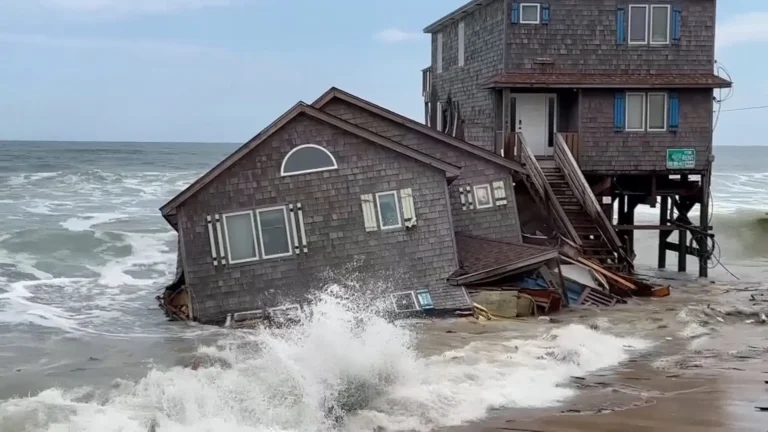
Technical Failure: Scouring at the toe of a seawall, where the wall itself causes the sand at its base to wash away, eventually causing the wall to topple forward.
-
Regulatory Failure: Zoning laws that continue to allow high-density development in “erosion-prone” zones, creating a future liability for the state.
Governance, Maintenance, and Long-Term Adaptation
Effective management is not a project; it is a cycle. It requires a “Governance Layer” that can outlast political terms.
The Adaptation Checklist
-
Annual: Monitor shoreline position via GPS; inspect structural joints in hard armoring.
-
Post-Storm: Conduct immediate bathymetric surveys to assess sediment loss volume.
-
Decadal: Re-evaluate sea-level rise projections against current infrastructure heights.
-
Trigger Points: Establish “Action Levels”—e.g., “If the mean high-water mark reaches within 50 feet of the road, the retreat plan begins.”
Measurement, Tracking, and Evaluation
You cannot manage what you do not measure.
-
Leading Indicators: Changes in offshore sandbar volume; rates of sea-level acceleration.
-
Lagging Indicators: Total square footage of land lost per year; annual cost of property damage.
-
Qualitative Signals: Biodiversity counts in marshlands; public sentiment regarding beach width.
Common Misconceptions
-
“Seawalls are Permanent”: Seawalls have a finite lifespan and often fail catastrophically during extreme events.
-
“Vegetation Can Stop Any Wave”: Living shorelines are excellent for low-to-mid energy environments but cannot replace structural defense in high-energy open ocean fronts.
-
“Erosion is a Disaster”: Geologically, erosion is a natural process that provides sand for beaches further down the coast. It is only a “disaster” because we built stationary things in a mobile environment.
-
“Dredging is Free Sand”: Dredging sand from offshore can change the way waves refract, potentially increasing erosion on the beach you are trying to save.
Conclusion: The Ethics of Encroachment
The ultimate challenge of how to manage coastal erosion is an ethical and temporal one. We are attempting to freeze a boundary that is naturally designed to breathe. The most successful strategies of the next century will likely be those that prioritize “Adaptive Capacity” over “Structural Rigidity.”
As we move forward, the metric of success will shift from “How much land did we save?” to “How gracefully did we adapt to the changing sea?” Intellectual honesty requires us to admit that we cannot win a war against the ocean; we can only negotiate the terms of our coexistence along its edge.